
Nothing is Tied Down
Some Thoughts, 14 Fighting Seasons Later

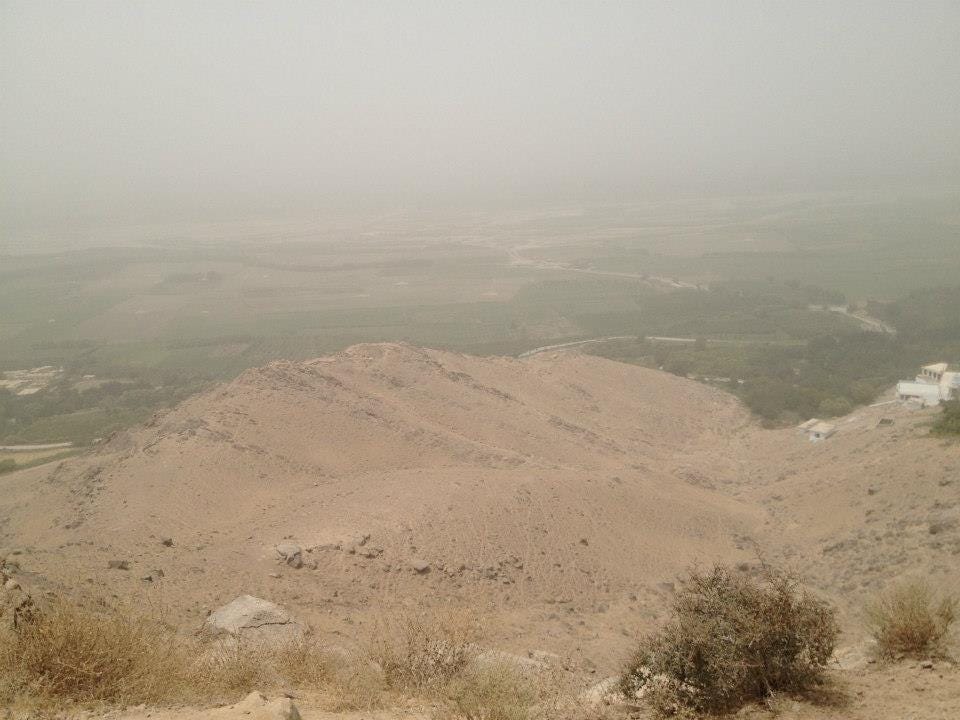
Above the Shrine of Baba Wali, Recovery Op, Kandahar, Afghanistan, 2012
It’s odd writing about Afghanistan after nearly 15 years. I’ve never really tried to write about my time there before, but it is part of my personal mythos, and it substantially changed my life and my outlook, so what better time than now?
Much of my overall writing here on Substack examines how memory and myth are intertwined and then passed down to us as history, and rarely in a stable, reliable construction.
Stories are woven, embellished, stolen, and misremembered, and changed in the re-telling, and I’m most interested in discussing this, but I’m also beginning to have trouble myself when I think back to my time in Afghanistan.
With this in mind, I’d like to write some of these thoughts down before I forget them, or before my memories become any more warped by time than they already are. I can probably make a good story of it all, for anyone interested in the military history of the Global War on Terror (GWOT) or in military life in general.
The Political Situation
I was one of the last soldiers to participate in offensive ground operations in Afghanistan, and did so as an infantryman, on the ground and outside the wire most days, so I probably have a few more stories to tell than most.
I didn’t spend much time sitting in a concrete bunker on a big, cozy airbase eating Burger King and playing video games like most other Boomerlennials, and so have no desire to embellish my experience.
I deployed for ten months from 2012 into 2013. At the time, the Coalition was beginning to roll troops back into those big, cozy air bases, and was no longer determined to challenge Taliban and insurgent fighters out in the wild, aside from select, surgical raids and staying actions fought over certain areas.
My deployment was shortened from twelve months to ten because this prevented the possibility of being granted mandated leave, and because Big Army knew they were sending us to one of the shittiest areas in Afghanistan, and many of us would likely die.
As far as the whole political situation, for those of you who hadn’t reached the age of majority at this time, Obama didn’t want his Press Secretary to talk about dead soldiers and the whole American public willfully participated in this giant charade which involved pretending like we weren’t at war but were simply policing or stabilizing the country alongside the Afghan Army and government.
It was really similar to where we are now, with Iran, where we are bombing them and killing people and they are firing at us and killing people but we are not at war, according to some legal technicality.
This is all lies, of course, and we were at war then just as we are now, but people then also wanted to enjoy their goysports and femoid entertainment programming in peace and without their attention being diverted elsewhere, so they mostly participated.
The Obama administration took a post-modern approach to conflict (not war) which allowed all the machinery to keep moving, and the drones to keep flying, and the contracts to be awarded to political clients, but also allowed the administration to evade tough questions from those few members of the media establishment who were still interested in Afghanistan, which were few.
For reference, most magazine pieces at this time had to do with Michelle Obama’s make-up routines, or the President’s favorite album.
No one had any expectation that the war would be won, because again, it wasn’t a war at all, it was a conflict, and conflicts are resolved, not won. The entire world was to be understood as if it were Mr. Obama’s kindergarten classroom.
When I first got to my unit in 2010, my Brigade Commander was relieved shortly after my arrival for having been a bit too effective at actually winning the war, which is to say he was very effective at sending his men to find and kill Taliban and insurgent fighters. This man was no Colonel Kurtz, but he was probably as close to a Colonel Kurtz as was ever allowed to set foot in Afghanistan by the Obama Pentagon.
Without naming him or my unit, I can say that many atrocities were committed by my receiving unit in 2010, and were then wrongfully ascribed to his command by the scolds in Washington. This didn’t improve his career prospects, and probably also effected his being relieved, but it also led Taliban fighters to believe my unit possessed some devilish numen when we redeployed to the same region in 2012.
His command philosophy, and the previous barbaric ruthlessness of the unit members who deployed before me in 2010, had a great impact on my survival in 2012, so I will not even pretend to resent it or believe myself above it. How could I, as a beneficiary?
War crimes aside, my Commander, I’ll call him Colonel Kurtz from now on, had committed a grave sin in the eyes of the Pentagon. He had sent his men out with little instructions other than to find and kill enemy fighters, and this was precisely the opposite of what the Pentagon wanted from Infantry Commanders at the time.
Pentagon leadership at the time practiced a very strange religion called Counterinsurgency (COIN) Doctrine.
This cult required “winning hearts and minds” in the exact same way that Yahweh requires foreskins. One can never have enough.
Each day, Commanders at every echelon demanded a count of the hearts and minds that had been won and had little interest in anything else. Each day they had staff officers prepare reports and tallies of all the hearts and minds gained and sent these numbers up to the Pentagon, where divination was then taken by observing the flights of birds and the entrails of small animals.
After my first Commander was sent on his way and most of the entire Command was replaced by conforming COINists, only a few apostates remained at the Battalion and Company levels.
I was lucky enough to fall in with a non-conforming battalion, one of the remnants of Colonel Kurtz’s legacy. And this was exactly where I wanted to be.
Yahweh’s Finest Foot Soldier
I’ve never been interested in doing the VetBro schtick, never been into the Team Room podcasts and Grey Man gear or in subscribing to monthly crates full of second-rate coffee or custom knives.
I mainly write about history and philosophy on Substack, which are my true passions, but these same passions are part of what led me to want to join the Army in the first place, so I should at least describe some of that here.
I did not join because I believed the narrative.
I did not join because I had no other options.
I did not join because I believed in the righteousness of our cause.
I joined because I wanted to be a soldier.
I’ve heard plenty of guys talk about the Warrior Ethos over the past 20 years. They’re usually selling some type of shit gear, shit take, or shit lifestyle. Personal trainers, Podcasters or Pentagon hirelings, it doesn’t matter. They’re all selling the same shit.
I still really don’t know what the Warrior Ethos is all about, given that our military is composed of paid soldiers and not tribal warriors, but I’ve met guys who’ve humped up mountainsides with broken bones to kill people and guys who’ve grappled into knife fights while clearing rooms.
I guess this is warrior-like activity, and I certainly wanted to be a good soldier, but I can’t stomach the defender of democracy nonsense and most of the people who talk about the Warrior Ethos end up drifting into muh Constitution nonsense as well.
No one who ever stepped onto a battlefield as a defender of democracy has ever been worth a shit and probably died in a matter of minutes. Being a good soldier is about being cleverer, meaner, more efficient, more disciplined, and more ruthless than the men trying to kill you. It’s nothing more than that.
The Warrior Ethos is a motto for people to posture and pose with, and to me is best embodied by guys like Hegseth, who sees himself as some type of Warchief because he has a confused jumble of crusader and tribal tattoos and hits the gym.
I’ve never looked into the guy with any depth, but from what I’ve gathered, he is representative of the demographic that maybe took effective fire once or twice and then made their living never letting anyone else forget about it. These are guys who practice their thousand-yard stare in the bathroom mirror when they’re out at the bars, trying to look harder than they are or ever were, and desperately want you to ask them about their tattoos, or their buddy bracelets. They need to know they look the part.
In my experience working at various levels in the Department for nearly two decades, I’ve met very few guys who’ve actually seen sustained combat like I did. There are a lot of people who’ve been shot at, many who were on a big base that took indirect fire, but very few who actually rotated through firebases, fought out of strongpoints, prepared hasty fighting positions, or staked out overnight on small-kill teams.
In my experience with SOF units as well, these guys were mainly on raids, and while they hit a high tempo at times, they were not out grinding it every day in the orchards, fields and overgrown grape rows, this simply wasn’t their job to do. It was the job for the dumb grunts to do, but even then, very few were ever actually in a firefight where they could see the enemy’s face.
In this respect, I was lucky, or unlucky, depending on how you view it.
I joined the Army later in life (mid-20’s). I had a disqualifying medical condition in my youth which made me reluctant to be discovered as unfit and then get turned away, so instead I went to school got a bullshit degree, pretended like I wanted to be a professional, and then started Law School.
I maintained this charade for a few years before I said “fuck it” and tried to join up anyway. It was 2009 at this point, and I was 26 years old. I knew I’d be an old man by Army standards, but I also knew that the Army needed soldiers to surge in Afghanistan, so they’d maybe let me in, as the guys who’d joined after 9/11, including most of my friends, were now getting out.
When I got to Ft. Benning, the physician outright told me that I should’ve been DQ’d and asked me if I wanted to go home. I told him there was no way I would do that, he left the room, came back with an amended form which I signed, and I was on my way to reception.
My family had tried to convince me out of joining. I had a degree and a job, after all.
And I had my choice of jobs in the Army: missile technician, intelligence, communications, etc… In lieu of all that, I enlisted in the infantry.
My take then is the same as it is now with anything. If you’re going to do something or be something, then be it fully. If you’re going to be a soldier then be a real one. No one who grew up playing soldiers ever pretended to be a missile technician.
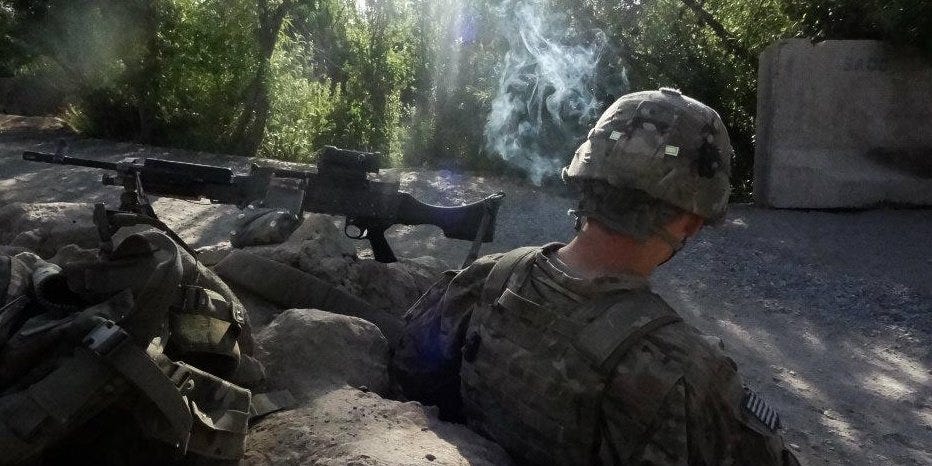
Patrol Ops, Arghandab River Valley, Afghanistan, 2012
My rationale to my grieving mother at the time was that I’d be safer around soldiers who expected to fight than soldiers who’d deluded themselves into thinking they’d be safe. She seemed to buy it, but I think she suspected the truth, that I wanted to get as close to death as possible. I wanted the risk.
At this point in my life I’d seen my share of bar fights, had guns pulled on me in the street, etc… but I wanted much more than all of that. Of course, I thought the whole pretext for war was Fake and Gay, and I already had my suspicions about US/Israel relations and foreign policy. I didn’t care. I wanted to be a soldier, and after reading about Taliban dousing little girls with acid, I figured they deserved to die as much as anyone else, whether it was all Fake and Gay or all for Yahweh or not, I wanted to find out for myself.
The Military Situation
When my unit of non-conforming COINists arrived at the start of the fighting season in 2012, the Taliban, having struck deals with their Pashtu brethren in Pakistan, were crossing the border at will and probing various areas throughout Kandahar Province they’d previously abandoned.
On the night we pushed out to our first outpost, there was a political assassination in Kandahar City, aka Alexandria Arachosia. As we drove through the city that night it looked straight out of Apocalypse Now, as tracer rounds flashed through the sky and all out urban warfare broke out between the Afghan Police, Afghan Army, and suspected Taliban sympathizers nested in neighborhoods.
It was absolute chaos, and from this first time outside the wire, I was hooked. I knew I didn’t want to be anywhere else.
When we arrived at our first outpost in Jelawur and started to take in the situation, we were told that we would do presence patrols up and down the river valley until we got our feet beneath us. This was a mostly mild spot within the area of operations at the time, as the fighters were gathered farther south, near Pasab and Panjwai.
Of course, the main effort at this time, as I see it now in retrospect, was that the CIA and their Afghan proxies in Helmand and Kandahar were pushing opium into Iran, as a bid to weaken the regime, and so the Taliban’s resurgence in Kandahar threatened both this illicit drug traffic and the appearance that Afghanistan was a real functioning state with good governance.
In case you didn’t know, Iran has had the highest number of opium addicts per capita of any nation, for decades. When the opium crop was eradicated by the Taliban, this disrupted a major source of instability-making in Iran, and of course this whole Iran business has been on the checklist for some time.
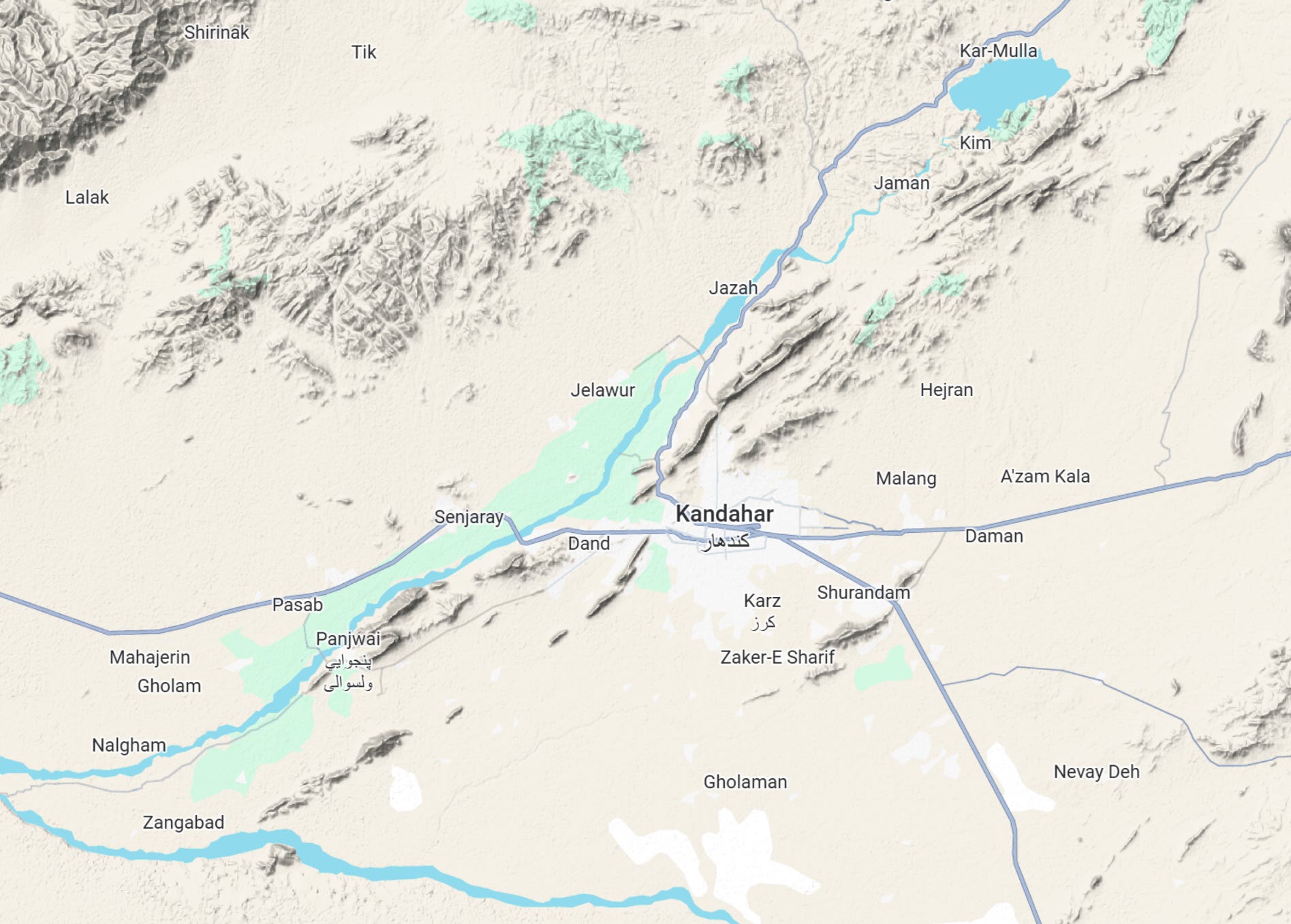
Central Kandahar Province, Afghanistan
After a few mostly quiet weeks around Jelawur, my company was detached from our Task Force and sent south, down the Arghandab River Valley and into Zharay/Panjwai District. As I said, the Army was mainly focused on consolidating forces at the large airbases at this time, and the Taliban began to notice this immediately, as platoons (30 men) were replacing companies (150 men) at various strongpoints, giving them much more freedom to attack and maneuver.
Naturally, they took to attacking us in earnest on an almost daily basis, believing they had us on the run. They were right, of course, Coalition Forces were on the run, but for the few units expected to execute offensive operations at the time, such as mine, we were not going back to big comfy bases, though there was one such base at Pasab and another huge base south of Kandahar City.
We were instead left to keep fighting, at various combat outposts and strongpoints up and down the district, south of Highway 1, the main artery of southern Afghanistan that runs from Helmand Province to Kandahar City and then up to Kabul.
So while everyone else consolidated back at the big comfy bases, settling into Fobbit life, with their gyms, restaurants, and internet cafes, spending most days doing whatever non-combat soldiers do, my platoon was asked to replace an entire company, and left to find and fight the Taliban before they fully realized they could put more men in the field than we could.
To some men, nothing is more yearned for than to fight against the odds or against a numerically superior enemy, and then through some combination of luck or skill, to not only win, but to live to tell the story. I have always had this underdog complex, have always loved fighting against odds, so this too was something that was not disheartening to me, but energizing.
This is an already long entry, so I will close with this: just before my platoon was sent south, my First Sergeant told us that we should never share our best war stories, because if we did, one day we’d hear some Fobbit sitting at the end of the bar telling our story, as if it belonged to him.
He was right, of course, and this has happened over the years, but I will nonetheless try to share a bit more about my experiences here. If anything, too many stories have already been stolen and truer ones need to be told.
You had me at orchards and grape rows.
Your writing brought me into places and experiences I could never have known firsthand. Poetic, sharp, with a dash of humor and deeply human. “If anything, too many stories have already been stolen and truer ones need to be told.”
Thank you for sharing yours. I’m grateful you did survive such experiences in order to write and share your journey with all of us.