Table of Nations, Part II (R1B)
Mapping Mythology in Archaeogenetics

To continue our table of nations, we will shift now to the second son of Patros, the primordial Father of the Steppe, which is Doru, whose name derives from “Spear.”
Doru carried the spear in conquest as did many of his descendants. The spear itself is a weapon of the sky, it is man’s thunderbolt, which can be used to strike and cast.
The second wife of Patros was Bratya, who might have been a woman from the Southern Steppe, near the Caucasus, given the genetic similarities we see between Doru’s descendants and the peoples of Anatolia and the Caucasus.
Doru was the first brother to venture West and South, into the Balkans, Greece, Armenia and parts of Anatolia. There he would have found some people similar to his own, who themselves had migrated some millennia before his own time.
But Doru, like his father and elder brother, took many wives and had many sons who would form the great nations of antiquity.
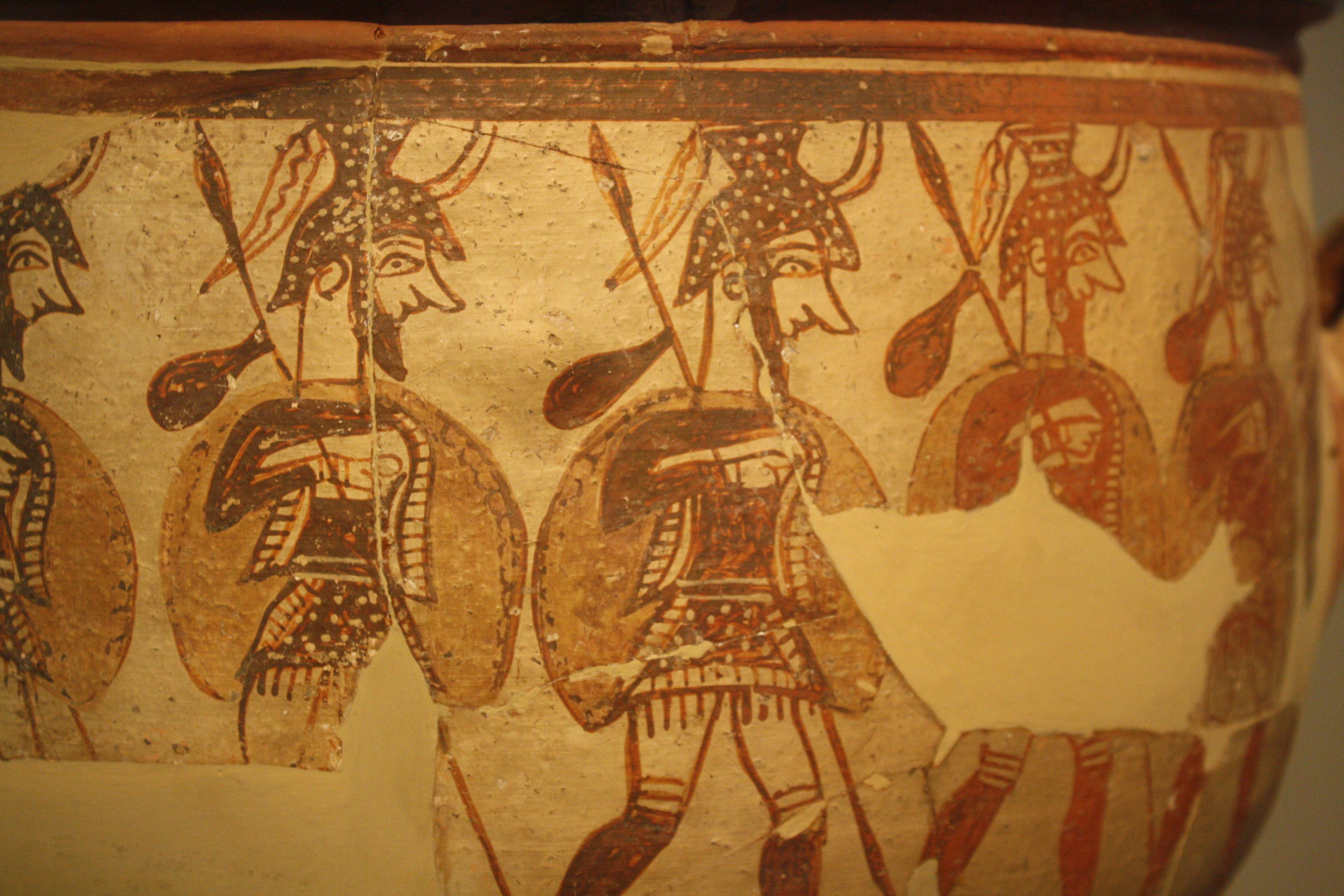
From Thalassaia, a lady of sea traveling people, came Mykenes, a father of Mycenae.
From Zeryna, a highland woman of the Balkans, came Thraix, a father of Thracian people.
From Illythia, a lady of the stone hillforts, came Illyrios, a father of the Illyrian people.
From Phyrgia, a lady of the plateau of Anatolia, came Phyrgios, whose people built great mounds and worshiped Great Mother.
From Araxia, a lady of the Caucasus river valleys, came Aramnos, who would slay tyrants and father the Armenians.
Mykenes ruled from lavish palaces, and built great walls and fleets. He quarreled with Thraix and Illyrios over tribute and trade. He wed Aigialeia and Dryope, whose clans gave him ships and highland warriors. This gave his people strength by land and sea.
Thraix celebrated ecstatic rites beyond palace walls. He raided his brother Illyrios but in turn sent priests and bards to foreign courts. He wed Orpheia, whose people united song and music and made solemn rites. From these songs came man’s knowledge of immortality.
Illyrios built forts and fleets, and raided his brothers’ lands. But he also shared trade with cousins and confederated councils. With his wife Sodra, he fathered Taulantia. And with a mistress, Troia, he likely fathered the men of Troy.
Phyrgios traveled farthest of the brothers, and quarreled over coasts. He married Cybele, and his people worshiped storm kings and mountain mothers.
And lastly, Aramnos, the defender of the highlands. He married Nane and Araxia, and learned mountain archery and river forts, the hallmarks of Armenian resilience.
So from Doru and his line came many of the people of Greece, the Balkans and Asia Minor. Like all the others, they likely did not come as a unified wave of conquerors but as adventurers and able men. They took wives through trade, truce and battle, but ultimately blended their peoples into one, with their sons and daughters preserving reverence for the Gods of the Sky, Sea and Earth.
This make me remember a nagging thing of my childhood.
My father, a veneto, often recounted that his family came to Adria, by ship, from Hillyria.
Only when it was too late, I realized that Adria was a viable port until about the first century B.C.
Now Adria sits at 40 km from the Adriatic sea.
How could my father know it ?